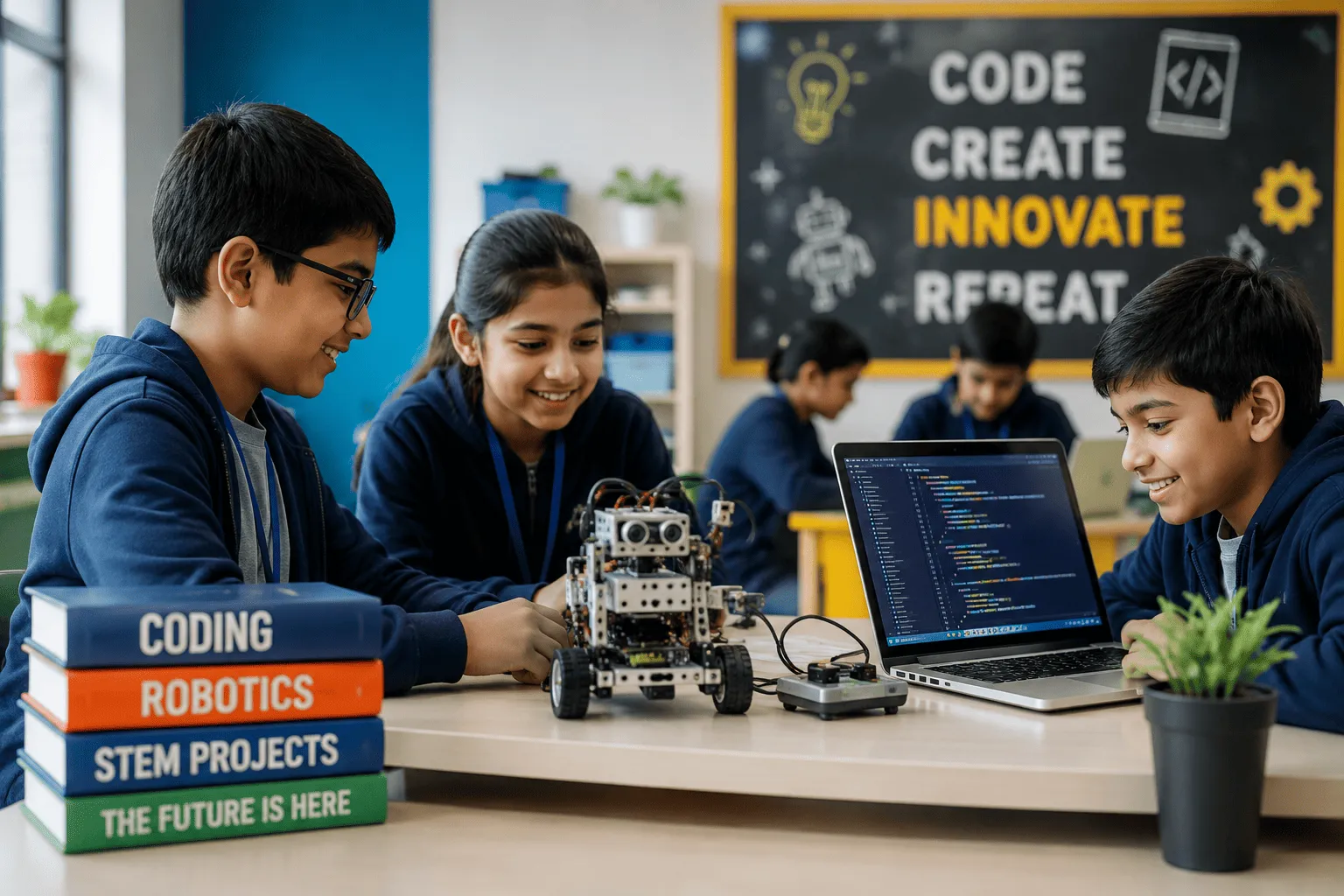
Across the world, classrooms are evolving beyond traditional textbooks and blackboards. Today, many schools are introducing robotics and coding clubs to give students opportunities to learn through creativity, experimentation, and problem-solving. These clubs are becoming an important part of modern education, helping children build practical skills that prepare them for a technology-driven future.
Unlike conventional lessons that often focus on memorizing facts, robotics and coding encourage students to think independently and explore solutions through hands-on activities. Whether it is programming a simple robot to move through an obstacle course or creating a basic mobile game, students are learning by doing—an approach that makes education both engaging and meaningful.
Learning Beyond Computers
Despite common misconceptions, coding clubs are not only about writing computer programs. Students also develop logical thinking, teamwork, communication, and perseverance while working on projects. They learn how to break down complex problems into smaller steps, test different ideas, and improve their solutions through trial and error.
Robotics activities make these concepts even more exciting. Building and programming robots allows children to see how software and hardware work together. This practical experience helps them understand science, technology, engineering, and mathematics (STEM) in a way that textbooks alone cannot achieve.
Building Confidence Through Creativity
One of the biggest advantages of robotics and coding clubs is the confidence they help students develop. Every successful project, no matter how small, gives children a sense of accomplishment. Even when a project doesn’t work as planned, students learn to identify mistakes, make improvements, and try again.
This process teaches resilience and encourages a growth mindset—an understanding that learning comes from practice and persistence rather than immediate success.
Many educators have observed that students who are initially hesitant in academic subjects often become more engaged when given opportunities to create, design, and experiment. Coding and robotics provide a platform where curiosity is encouraged and mistakes become valuable learning experiences.
Preparing Students for Tomorrow’s Careers
Technology is influencing nearly every profession, from healthcare and agriculture to finance, transportation, and environmental science. While not every child will become a software engineer or robotics expert, digital literacy and computational thinking are becoming essential skills across a wide range of careers.
By introducing coding and robotics at an early age, schools are helping students become comfortable with technology instead of simply consuming it. Children learn to create digital solutions, understand how technology works, and develop the confidence to adapt as new innovations emerge.
Encouraging Collaboration and Teamwork
Most robotics projects are completed in teams, giving students opportunities to collaborate with classmates. They discuss ideas, divide responsibilities, solve challenges together, and celebrate shared achievements.
These experiences help strengthen communication skills, leadership qualities, and mutual respect—abilities that are valuable far beyond the classroom.
Teachers also find that collaborative projects create a more inclusive learning environment, allowing students with different strengths to contribute in meaningful ways.
Support from Parents and Schools
The growing popularity of robotics and coding clubs is supported by both educators and parents who recognize the importance of future-ready learning. Many schools are investing in dedicated STEM labs, organizing coding workshops, and participating in robotics competitions to inspire innovation among students.
Parents, too, are encouraging children to explore technology in balanced and constructive ways. Rather than spending all their screen time on entertainment, students can use digital tools to create projects, solve challenges, and express their ideas.
Looking Ahead
As education continues to evolve, robotics and coding clubs are becoming much more than extracurricular activities. They represent a shift toward learning that is interactive, practical, and focused on developing skills for the future.
By combining creativity with technology, schools are empowering young learners to become confident problem-solvers, innovative thinkers, and responsible digital citizens. Whether students pursue careers in science, business, medicine, design, or the arts, the skills developed through robotics and coding will continue to benefit them throughout their educational journey and beyond.
Put correct shortname from your Disqus account in Customizer settings.