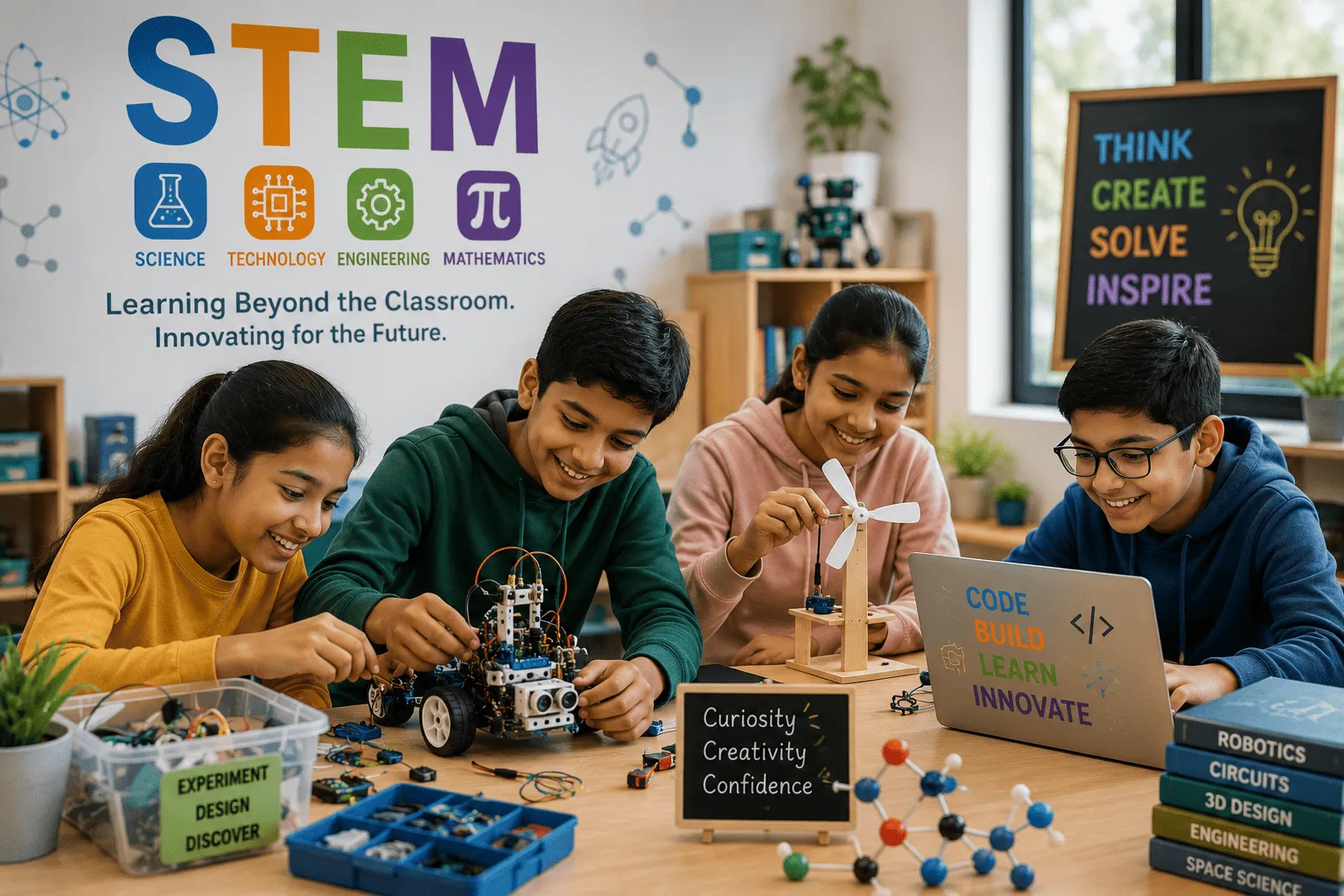
STEM education—covering Science, Technology, Engineering, and Mathematics—is no longer limited to school classrooms. Across the country, more parents, educators, and learning organizations are encouraging children to explore STEM through hands-on activities outside regular school hours.
From robotics workshops and coding camps to science clubs and DIY experiments at home, students are finding exciting new ways to learn while having fun. These experiences allow children to apply what they learn in school to real-life situations, making education more practical and engaging.
Learning Through Exploration
Unlike traditional classroom lessons, STEM activities beyond school often focus on exploration and creativity. Children are encouraged to ask questions, solve challenges, build simple models, and experiment with new ideas without the fear of making mistakes.
Whether it’s designing a bridge with everyday materials, creating a simple robot, or conducting a science experiment at home, these activities help develop problem-solving skills and boost confidence.
Parents Are Becoming Active Participants
Many parents are also showing greater interest in STEM learning by involving their children in educational games, science kits, museum visits, and online learning programs. Instead of relying only on textbooks, families are creating opportunities for children to learn through experience and curiosity.
Weekend STEM workshops and holiday camps have also become popular choices, giving students a chance to interact with peers who share similar interests while learning new skills in a fun environment.
Building Skills for the Future
Beyond academic knowledge, STEM learning helps children develop important life skills such as logical thinking, teamwork, communication, and creativity. These abilities are valuable in almost every career, regardless of whether a child chooses to become a scientist, engineer, designer, or entrepreneur.
Educators believe that exposing children to STEM activities at an early age helps build confidence and encourages a lifelong interest in learning and innovation.
Looking Ahead
As technology continues to shape the world around us, learning opportunities beyond the classroom are becoming an important part of a child’s educational journey. By combining school education with hands-on STEM experiences, children can develop practical skills, explore their interests, and become more confident learners.
With growing support from schools, parents, and educational organizations, STEM learning outside the classroom is helping prepare young minds for the opportunities and challenges of the future.
Put correct shortname from your Disqus account in Customizer settings.