As conversations about climate change, conservation, and sustainable living become more common around the world, schools are placing greater emphasis on environmental education. Rather than treating it as a single chapter in a textbook, many educators are weaving environmental awareness into everyday learning through practical activities, interactive projects, and community involvement.
The goal is simple: help children understand how their everyday choices affect the environment and inspire them to become responsible citizens who care for the planet. From classroom discussions on recycling to school gardens and tree-planting drives, environmental education is helping students connect what they learn in school with the world around them.
Learning Through Real-Life Experiences
Environmental education is most effective when students can see, touch, and experience what they are learning. Many schools are moving beyond traditional classroom lessons by encouraging children to participate in activities that make learning both meaningful and memorable.
Students may observe local plants and insects, create compost from food waste, measure rainfall, or conduct simple experiments to understand water conservation. These hands-on experiences help children develop curiosity while reinforcing scientific concepts in practical ways.
By exploring nature directly, students begin to appreciate the importance of protecting ecosystems and using natural resources responsibly.
Small Habits That Make a Big Difference
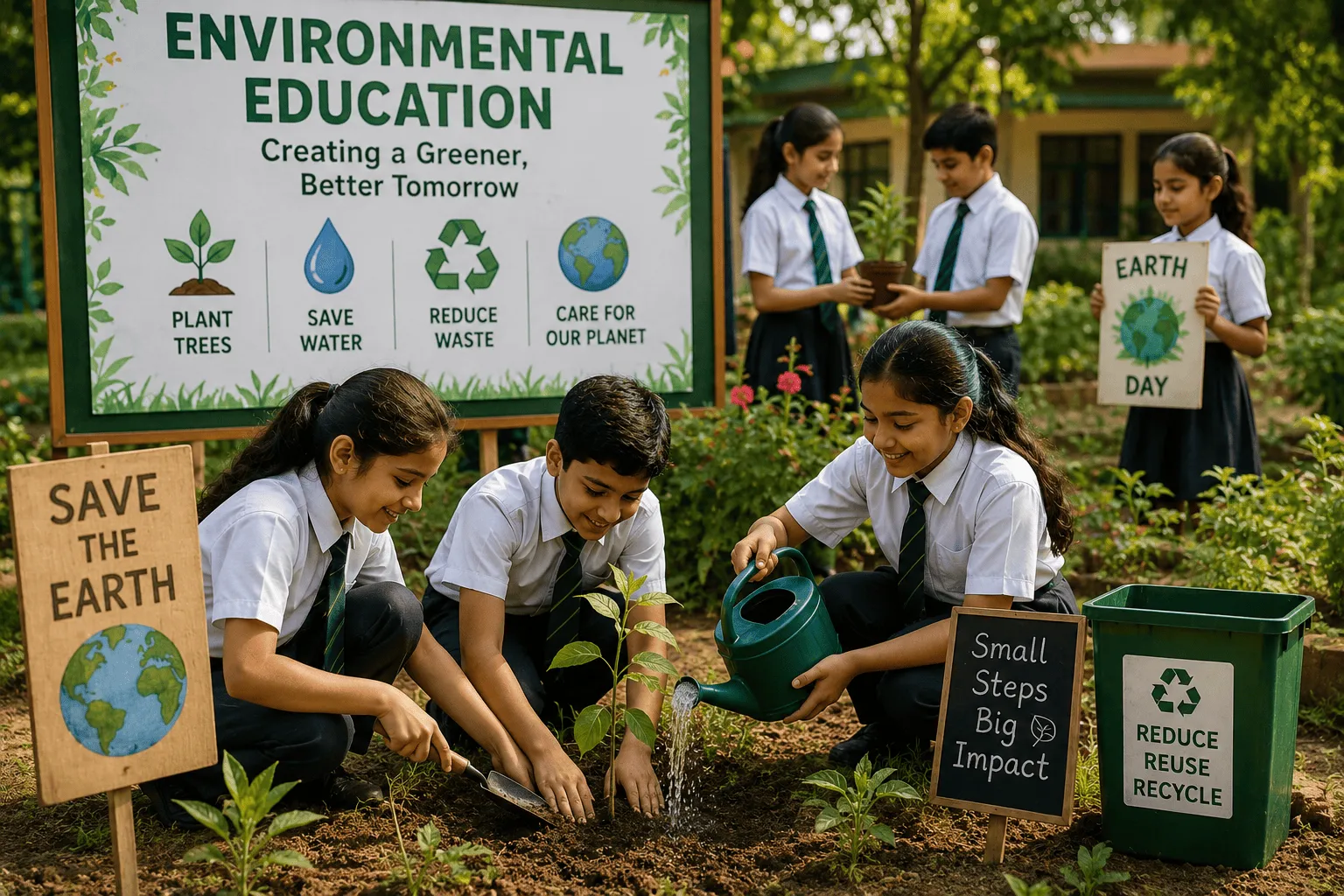
One of the key messages of environmental education is that even small actions can have a positive impact. Schools are encouraging students to adopt simple habits such as reducing plastic use, switching off lights when not needed, conserving water, and separating recyclable waste.
Many classrooms have introduced eco-friendly initiatives where students take responsibility for maintaining clean surroundings or managing recycling bins. Some schools even organize “Green Weeks” or “No Plastic Days” to encourage environmentally responsible behavior throughout the campus.
These activities help children understand that protecting the environment is not limited to large-scale projects—it begins with everyday choices made at home, at school, and within the community.
Connecting Environmental Awareness with STEM Learning
Environmental education naturally complements Science, Technology, Engineering, and Mathematics (STEM). Students often investigate topics such as renewable energy, weather patterns, biodiversity, air quality, and sustainable farming through research and classroom experiments.
For example, children might design a simple rainwater harvesting model, build a solar-powered project, or study how plants help improve air quality. Such activities combine creativity, critical thinking, and scientific inquiry while helping students understand real-world environmental challenges.
These projects also encourage teamwork and problem-solving, making learning more engaging and relevant.
Building Responsible Future Citizens
Environmental education is about more than learning facts—it is about developing values and responsibility. As students become more aware of environmental issues, they also begin to recognize the importance of cooperation and community action.
Schools often involve students in campaigns such as tree plantation drives, neighborhood clean-up activities, paper recycling programs, and awareness events for families. These initiatives teach leadership, teamwork, and civic responsibility while showing students that collective efforts can make a meaningful difference.
Children who develop environmental awareness at a young age are more likely to carry sustainable habits into adulthood, influencing their families and future communities in positive ways.
Parents Play an Important Role Too
The impact of environmental education becomes even stronger when learning continues at home. Parents can reinforce these lessons by encouraging simple sustainable practices such as carrying reusable water bottles, reducing food waste, planting small gardens, or discussing ways to conserve electricity.
When schools and families work together, children see that caring for the environment is not just a classroom activity but a shared responsibility that benefits everyone.
Many schools are also inviting parents to participate in environmental awareness programs, creating stronger connections between education and everyday life.
Looking Ahead
Environmental education is becoming an essential part of preparing children for the future. As global environmental challenges continue to grow, schools are helping students develop the knowledge, skills, and values needed to make informed and responsible decisions.
By combining classroom learning with practical experiences, environmental education encourages curiosity, compassion, and action. Whether students are planting a tree, reducing waste, or exploring renewable energy, every small step contributes to a deeper understanding of the world they live in.
As more schools embrace sustainability-focused learning, today’s students are growing into environmentally conscious individuals who are better equipped to protect the planet for future generations.
Put correct shortname from your Disqus account in Customizer settings.